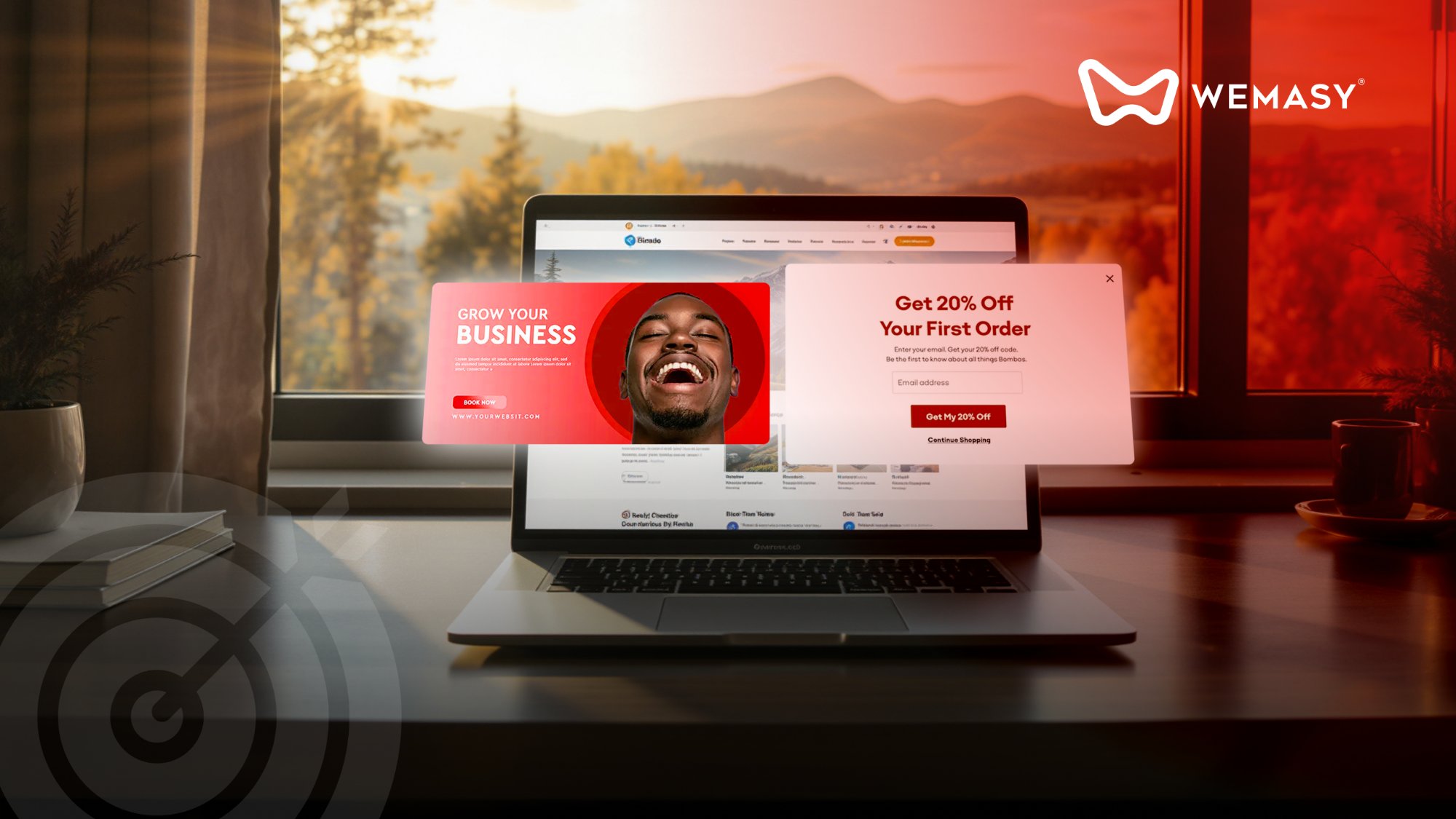
What are pop-ups?
Pop-ups are windows that appear on top of your website content, usually with a call to action. In the pop-ups vs banner comparison, pop-ups are more attention-grabbing because they appear as an overlay on the content to grab the attention of the user. Many website owners ask, are popups better than banners when it comes to conversions. The answer depends on how and when you use them. Popups are best used for the following:
Time-sensitive promotions or discounts.
Capturing emails or sign-ups quickly.
Retaining users by engaging with them before they take time on an action or before they drop.
What are banners?
Banners are non-intrusive messages that sit at the top, bottom, or side of a page. Unlike pop-ups, they don’t block content and don’t require the user to interact with them immediately. In the popups vs banner discussion, banners are considered less disruptive and better for long-term messaging. Their place is fixed on the website layout to attract users.
For better results, focus on banner conversion optimization, which means improving placement, message clarity, and call-to-action strength.
Displaying sales, discounts, or events that don’t need immediate attention.
Informing visitors about new features, seasonal offers, or important updates.
Giving the visitor an idea about the brand or an intro to the page the visitor has landed on.
Pop-up vs Banners
Pop-ups and banners are used to grab attention. However, both are not used for the same goals. In the popups vs banner comparison, it is important to understand intent before choosing.
Here is a quick comparison to help you see which one might work best for your website.
Pop-ups | Banners | |
Goals | Used to trigger urgent sales, to collect leads, to guide users, and to retain them from exiting. | Generally used for the introduction of a page, product announcements, subtle nudges, and non-urgent reminders. |
Placement | The pop-ups pop up on the screen when triggered, covering the content on the website. | They are decided during the layout creation, in the hero section, and in dedicated parts of the page. |
Engagement | Draws attention immediately. | Takes time to draw attention. |
Conversions | The intent is to catch the eye of the users and convert. | The intent is subtly intrigue the user by putting the message out first. |
When to choose a pop-up?
Pop-ups are best used when you need to grab immediate attention or prompt visitors to take action quickly. This is where many businesses believe pop-ups outperform banners in the popups vs banner comparison.
Lead generation: Use pop-ups to collect visitor information, like email addresses or sign-ups for newsletters. Offer incentives like discounts, free resources, or exclusive content.
Time-sensitive offers: When you have a limited-time promotion or flash sale, pop-ups can create urgency.
Exit retention: Pop-ups are extremely effective for exit-intent triggers when a user is about to leave your website. This is your chance to offer a final incentive or gather feedback before they go.
Critical action: If there’s an important step you don’t want visitors to miss, a pop-up can ensure it gets attention. This could be completing a checkout, signing up for an event, or confirming a subscription.
Important announcement: Pop-ups work well for urgent updates or announcements that require immediate attention from your visitors. Something like, service downtime, product launch, or policy changes.
When to choose a banner?
Banners are ideal when you want to gently nudge your visitors without disrupting their experience. In the popups vs banner comparison, banners are preferred when urgency is not required.
If your message isn’t time-sensitive but still important, banners are perfect.
Banners are good for promoting free shipping, a new feature, or an upcoming event.
Great for subtle reminders and raising awareness about your brand, products, or services.
You can promote a seasonal sale or a discount that lasts all month.
You can highlight important content, user guides, or quick links that improve the overall experience without interrupting the visitor’s journey.
Make your pop-ups with WEMASY’s Pop-Up tool
Now that you understand the best use of popups and banners, the next step is making them work for you.
Build exit-intent pop-ups to capture abandoning visitors.
Design time-based or scroll-triggered pop-ups to boost engagement.
Add banners alongside pop-ups for ongoing announcements or promotions.
Track performance with analytics to see which pop-ups convert best.
With a pop-up maker, you get full control over design, placement, and timing, ensuring your pop-ups are strategic and effective. If you want to stop wondering whether pop-ups are better than banners and start using both strategically, WEMASY’s Pop-Up tool makes it easy. You can create, customize, and launch pop-ups in no time, without needing any technical skills. Try it for your website.
For more on building pop-ups that convert, read our blog on pop-up building tips. To understand how design impacts your conversions, check out is your design working for your goals. You can also read about A/B tests for your website to test which format works best.
Frequently asked questions
Are popups better than banners for lead generation?
For immediate lead capture, yes. Pop-ups demand attention and prompt a quick decision, which makes them effective for email sign-ups, discount offers, and exit-intent retention. Banners are better for ongoing awareness and subtle nudges. The best results come from using both together, with pop-ups for urgent actions and banners for persistent messaging.
Do pop-ups hurt my website SEO?
Intrusive pop-ups that cover the main content on mobile can negatively affect your search rankings. Search engines penalize pages where pop-ups block the content a user came to see. Use timed or scroll-triggered pop-ups instead of immediate full-screen overlays, and always make them easy to close. WEMASY’s Pop-Up tool lets you control timing and display rules to stay compliant.
How do I improve banner conversion optimization?
Focus on three things: message clarity, placement, and call-to-action strength. Your banner should communicate one clear benefit in as few words as possible. Place it where visitors naturally look, like the top of the page or inline with content. Make the call-to-action button stand out with contrasting color and action-oriented text.
When should I use an exit-intent pop-up?
Use exit-intent pop-ups when a visitor is about to leave without converting. This is your last chance to offer a discount, collect their email, or redirect them to a relevant page. Exit-intent works best on product pages, pricing pages, and landing pages where losing a visitor means losing a potential customer.
Can I use both pop-ups and banners on the same page?
Yes, but be strategic. Use a banner for ongoing messaging like a sale or new feature, and a pop-up for a specific action like email capture or exit retention. Avoid triggering both at the same time, as that can overwhelm visitors. Stagger them so the banner is always visible and the pop-up appears based on user behavior.
Can WEMASY help me create pop-ups and banners?
Yes. WEMASY’s Pop-Up tool lets you build exit-intent pop-ups, time-based pop-ups, and scroll-triggered pop-ups without any coding. You can customize design, placement, and timing. For banners, you can add them to any page through the website builder. Both tools include analytics so you can track performance and optimize over time.